
Learning to Grow: Training for New Opportunities
Date: September 24, 2026
How FogHill Leverages Experience, Preparation, and Veteran Leadership to Enter New Markets
For FogHill, Inc., winning business has never been simply about finding the next contract. It has been about building a company capable of delivering when the opportunity arrives.
That distinction has helped the Washington, D.C.-area facilities management company grow from a small entrepreneurial venture into an organization with a substantial workforce, strong commercial track record, and an expanding presence in the federal marketplace.
FogHill provides services ranging from janitorial and facility maintenance to HVAC, plumbing, electrical and other building services. Its growing government portfolio includes a recently won Blanket Purchase Agreement supporting VA Medical Centers in Washington, D.C., and Baltimore – an important step as the company deliberately expands beyond the commercial market that built its business.
But FogHill’s story is also about something larger: how the skills, discipline and sense of responsibility developed through military service can translate into entrepreneurship – and how veteran business owners can accelerate that transition by continuing to learn, build relationships, and surround themselves with people who understand the challenges of growing a business.
A Family Business with a Veteran Foundation
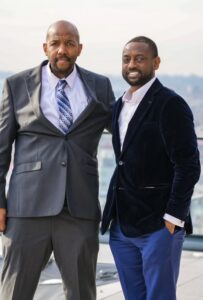 FogHill’s growth has been shaped in large part by the complementary work experiences of father and son, Charles Mobley and Shinar Little. An Army veteran, Mobley brings more than 50 years of experience in maintenance and the trades, while Little brings business development and executive management experience. Together, they have helped build a company that combines technical expertise with a strong emphasis on workforce development, customer service, and disciplined performance.
Mobley’s military background is also part of a broader veteran influence on the company. Military service often develops qualities that translate well to both entrepreneurship and the corporate environment – discipline, preparation, accountability, adaptability, teamwork, and an expectation that responsibilities will be carried through to completion. For FogHill, those qualities are reflected not simply in how the company is led, but in how it prepares its employees and approaches its work.
Those principles can be seen throughout FogHill today.
One of the company’s early breakthroughs came with a large facilities services assignment at one of the nation’s top universities. Rather than simply hiring enough people and sending them to work, FogHill prepared its team extensively before the contract began. Employees received technical and site-specific instruction as well as professional communication and client relations training, helping ensure they were prepared not only to perform the work, but also to interact effectively with customers.
Little described the significance of their training philosophy and its impact on this contract: “We only performed great because we prepared for great performance.”
That mindset became part of FogHill’s operating model.
Building People Before Building the Business
FogHill developed its own hiring and training program designed not simply to fill positions, but to develop employees who would be successful. The company had already learned that technical ability alone was not enough – successful contract performance also required communication, documentation, professionalism and the ability to interact effectively with customers and coworkers.
The company’s emphasis on people has produced results. Little reported a 92% customer retention rate and 94% employee retention rate – nearly triple the industry average – and many FogHill employees have been with the company for five to six years.
It also supports the company’s larger community mission. FogHill’s workforce-development efforts have included returning citizens and others seeking entry-level opportunities to learn trades and establish careers. For Little, business growth and community impact are connected: a stronger company creates the capacity to employ, train and help more people.
Yet growing that company required FogHill’s leadership team to learn some lessons of its own.
One was financial. As the company took on larger contracts, it needed sufficient working capital to pay employees and meet operating obligations before customer payments arrived. Advisor Waymon Guinn helped connect the company with financing resources, and FogHill eventually built access to a $5 million line of credit—giving it considerably greater capacity to pursue and perform larger opportunities.
Another lesson involved the federal marketplace.
Commercial success did not automatically translate into government-contracting success. FogHill had to learn how to identify appropriate opportunities, evaluate whether requirements matched its capabilities, understand compliance, build teaming relationships and develop proposals strategically. Guinn had consulted with other clients who had expended many hours pursuing proposals they weren’t well-suited to or prepared for. At FogHill, he championed a much more refined approach: “We do proposals to win.”
That desire to succeed in government contracting was the primary reason FogHill became involved with the National Veteran Small Business Coalition (NVSBC).
Finding a Community of Veteran Business Owners
FogHill began participating with NVSBC in 2022, attending its first VETS conference that year. Since then, members of the FogHill team have remained active in conferences, membership meetings, local DC-area engagement events, and training opportunities.
Their approach is notable because they always viewed NVSBC membership as more than a transaction. They saw it as access to opportunity.
Little readily acknowledges that FogHill did not join NVSBC expecting an immediate flow of contracts; instead, the value would come through information, training, networking, and relationships – the building blocks that can ultimately create opportunities.
Mobley is a regular participant in the DC Metro engagement events and has concentrated on building a regional network as well as learning from guest speakers and fellow attendees. Guinn sees an additional dimension to those activities. The shared experience gained from military experience often encourages Veterans to help one another – accelerating networking and teaming opportunities. In his experience, that makes the NVSBC environment different from many traditional business organizations.
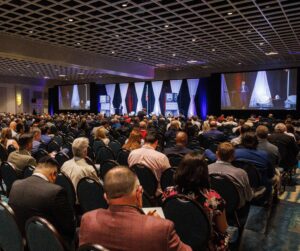 It is also why the annual VETS Conference has become an important part of FogHill’s calendar. Little said the company has attended every conference membership meeting since 2022. The larger conference environment gives companies like FogHill the opportunity to learn while expanding their network of other small businesses, primes, government representatives and potential partners.
For Guinn, those activities work together. Training provides knowledge. Meetings create relationships. Conferences broaden exposure. And each can generate connections or ideas that may become valuable long after an event ends.
A Fellowship Program for Government Contracting
That combination became especially tangible when Mobley participated in a unique program offered by NVSBC: a 9-month, intensive Fellowship Program. The program focuses exclusively on contracting opportunities with the federal government and is offered at no-cost to those who are accepted to the program.
Mobley compared the experience to returning to school – an opportunity to gain insights on specific business topics that could help grow the company but also hear from other Fellows and business owners in the cohort to compare challenges, share solutions and develop relationships beyond their own companies. Mobley has remained in contact with members of his cohort after the program.
For FogHill, that learning will continue. Little, Mobley, and Guinn were recently accepted into an advanced model of the NVSBC Fellowship Program, organized around five industry-aligned cohorts and supported by subject-matter experts, federal acquisition practitioners, and leaders in those industries.
With FogHill’s engagement across multiple NVSBC business development activities, Guinn sees a common denominator. Whether a conference, a one-hour training program, an engagement event, or a longer development program, he sees value in an organization where veteran business owners exchange information and experiences so they don’t have to “operate in a vacuum.” That becomes particularly important in federal contracting, where policies, priorities, and opportunities continually change.
A Company Built to Grow
There is no single individual responsible for FogHill’s growth.
Little credits Guinn’s government-contracting expertise, his father’s willingness to build relationships, the business-development experience of other members of the leadership team and, especially, the employees performing the work every day. As he put it, “without those people delivering for customers, FogHill is nothing but a name.”
A willingness to actively learn and adjust has been another key to success.
Veterans leave military service with valuable experiences, skills and disciplines, but entrepreneurship requires ongoing learning. They must understand customers, finance growth, build teams, navigate procurement systems, develop relationships, identify the right opportunities and – perhaps most importantly – perform once they win.
Organizations such as NVSBC can help provide training, connections, and a community that will help support the journey, but ultimately, those resources are most valuable when business owners engage with them – showing up to the meeting, attending the training, participating in the conference, asking questions, exchanging ideas, and following up with new contacts.
FogHill has been doing exactly that.
And as the company grows its way into government contracting, its story demonstrates a principle familiar to anyone who has served: success is built on the preparation that comes before it.